
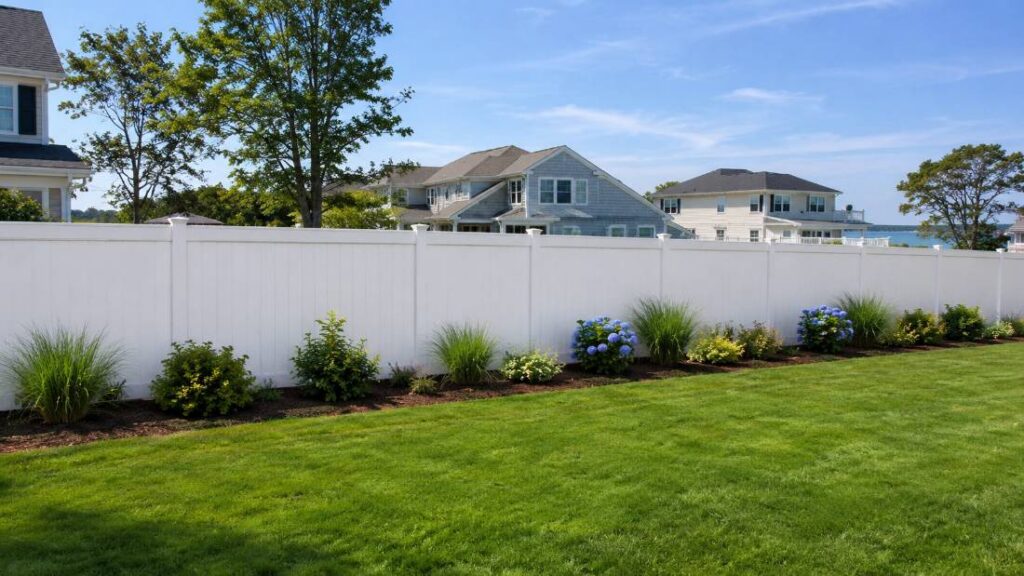
Planning a fence in Ocean County starts with one important step. Check your local municipality before ordering a single post or panel. Unlike some states with unified county-wide codes, New Jersey places fence regulation authority at the township level. That means the rules in Toms River may differ from those in Brick, Jackson, or Lacey.
This guide covers what Ocean County homeowners typically encounter. It is a starting point — not a substitute for checking with your local building department directly.
Why Fence Regulations Vary Across Ocean County
Ocean County spans over 900 square miles and includes 33 municipalities. Each one sets its own zoning ordinances, height restrictions, and permit requirements. A fence that is fully compliant in Berkeley Township may require a variance in Stafford Township.
The variation is not arbitrary. Coastal communities have different concerns than inland townships. Barrier island towns manage sightlines, wind exposure, and environmental setbacks. Inland communities like Jackson and Manchester focus more on property boundaries and residential density.
Understanding why the rules exist helps homeowners navigate the process. It also prevents costly mistakes — like installing a fence that has to come down.
Do You Need a Permit for a Fence in Ocean County?
In most Ocean County municipalities, yes. A permit is required for the majority of fence installations. The threshold that triggers the permit requirement varies by town.
In Toms River, a building permit is required for most new fence installations. The application typically requires a property survey or plot plan showing the proposed fence location relative to property lines. Processing times vary by season — spring and summer applications take longer due to higher volume.
In Brick Township, permits are also required for new fence installations. Setback distances from property lines are specified in the zoning code. Front yard fences are held to stricter height limits than rear yard fences in most residential zones.
Jackson Township follows a similar framework. Permit applications require documentation of the fence location and materials. Jackson’s rural character means larger lot sizes are common, but the permit process still applies to residential fence projects.
If your property sits in a flood zone — common in coastal and bayfront areas of Ocean County — additional review may be required. The New Jersey Department of Environmental Protection has its own rules for structures in flood hazard areas. Your local building department can tell you if those rules apply to your property.
Common Fence Height Limits in Ocean County
Height limits are the most frequently misunderstood part of local fence codes. Most Ocean County municipalities follow a general framework, though specifics vary.
Front Yard Fences
Front yard fences are typically limited to three or four feet in height across most Ocean County townships. Some municipalities restrict front yard fences to open styles only — picket or split rail — and prohibit solid privacy panels in front yards entirely.
Rear and Side Yard Fences
Rear and side yard fences are generally permitted up to six feet in most residential zones. Some townships allow up to eight feet under specific circumstances, such as commercial properties or lots adjacent to a roadway.
Corner Lots
Corner lot properties often face additional restrictions. Sight triangle requirements at intersections limit fence height near corners to maintain driver visibility. If your property sits on a corner, confirm the sight triangle rules with your building department before finalizing your fence plan.
Setback Requirements
Most Ocean County municipalities require fences to be set back a minimum distance from the property line. That distance varies — it can be as little as a few inches or as much as several feet depending on the zone.
Setbacks matter for two reasons. First, they protect neighboring properties and shared access areas. Second, installing a fence on or over a property line can create legal disputes that are expensive to resolve. A property survey is the only reliable way to confirm your exact property boundaries before installation begins.
At Eastcoast Fence, we recommend having a current survey on hand before any fence project starts. It protects the homeowner and ensures the installation goes in the right location the first time.
HOA Rules and Ocean County Fence Regulations
Many Ocean County communities — particularly in Jackson, Toms River, and Lacey — are governed by homeowners associations. HOA rules operate independently of municipal zoning codes. In most cases, both sets of rules apply simultaneously.
HOA architectural guidelines commonly restrict fence height, material, color, and style. Vinyl and aluminum are the most frequently approved materials in Ocean County HOA communities. Wood is permitted in some associations and prohibited in others.
Approval from the HOA architectural review committee is typically required before a permit application is submitted to the municipality. Starting with the municipality first — and skipping the HOA — is a common mistake that delays projects significantly.
Pool Fence Requirements in Ocean County
Pool fencing falls under a separate regulatory framework in New Jersey. State law sets minimum standards that apply across all municipalities, including those in Ocean County.
New Jersey requires pool enclosures to be at least 48 inches in height. Gates must be self-closing and self-latching, with the latch located on the pool side of the gate. These requirements apply regardless of local fence ordinances — local rules may be stricter, but they cannot be less restrictive than the state standard.
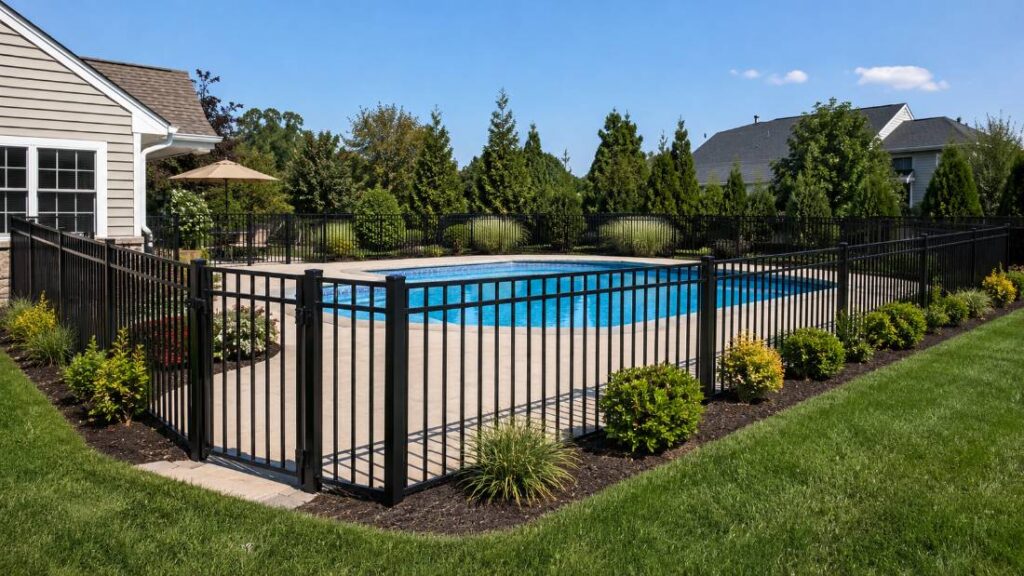
Aluminum fence is the most common material for pool enclosures throughout Ocean County. It meets code requirements, resists the coastal environment, and requires minimal maintenance. See our full guide to NJ pool fence requirements for complete details.
What to Do Before You Install a Fence in Ocean County
Following a clear sequence before installation starts saves time and prevents problems.
First, locate your property survey. If you do not have a current one, contact a licensed NJ surveyor. Second, contact your local building department and confirm the permit requirements, height limits, and setback distances for your zone. Third, if your community has an HOA, submit your fence plan for architectural review before applying for a permit. Fourth, call 811 before any digging begins. New Jersey law requires underground utility notification prior to excavation.
Once those steps are complete, your contractor can proceed with confidence. At Eastcoast Fence, we have been guiding homeowners through this process since 1999. We know the local building departments across Ocean County and can answer questions about what your specific municipality requires.
Working With a Local Fence Contractor Who Knows Ocean County
Permit requirements, setback rules, and HOA guidelines are easier to navigate with an experienced local contractor. A contractor who has worked across Ocean County municipalities knows which towns process permits quickly, which require additional documentation, and where the common sticking points are.
Eastcoast Fence has completed residential and commercial fence installations across Ocean County since 1999. Our team handles new fence installations of all sizes and materials. We stock everything in our own warehouse in Freehold — no supplier delays and no material substitutions.