
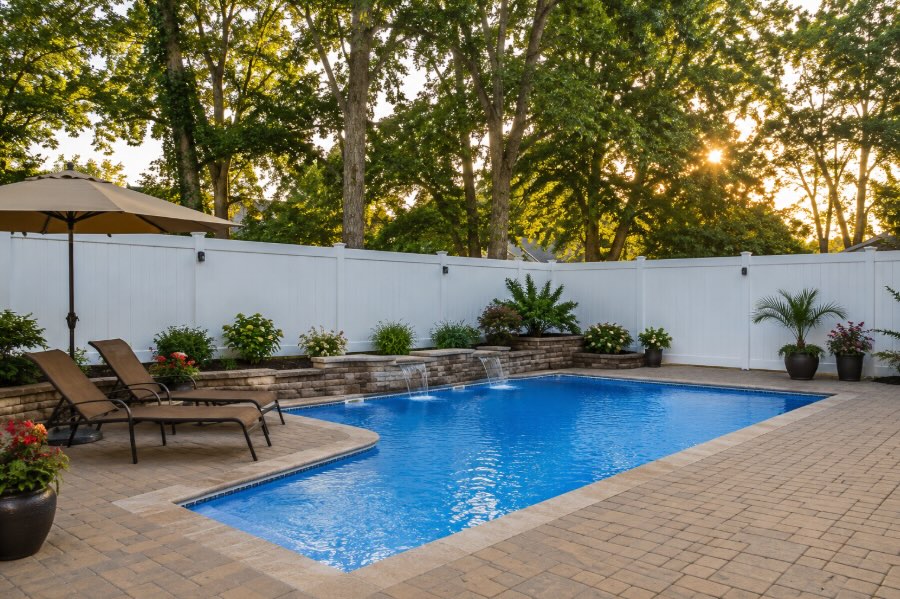
Putting in a pool is exciting. However, before the first swim, you need the right fence around it. New Jersey law is clear on this point. Every residential swimming pool must be fully enclosed by a fence. That rule applies statewide, from the shores of Ocean County to the inland communities of Monmouth County.
Getting this right matters for more than compliance. A proper pool fence protects children, satisfies your insurance carrier, and keeps your project on schedule. Here is what you need to know before you start.
What New Jersey Law Actually Requires
New Jersey follows the International Residential Code for pool barrier requirements. The rules are straightforward, but they carry real consequences if ignored.
First, the fence must be at least 48 inches tall. That height applies to all four sides of the enclosure. There are no shortcuts on any single side. Second, the fence must completely surround the pool area.
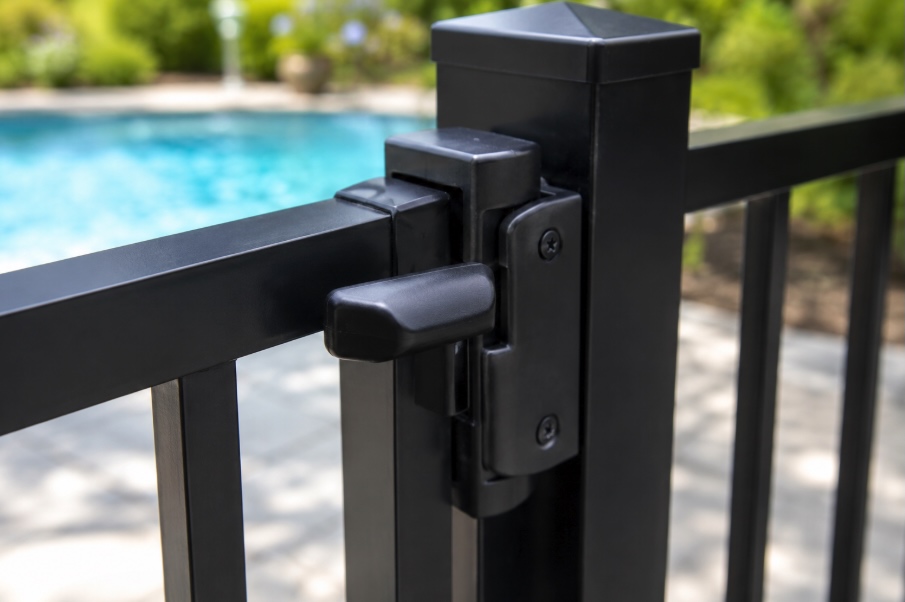
No gaps, no open corners, no partial enclosures. Third, every gate must be self-closing and self-latching. The latch must be positioned on the inside of the gate. That placement keeps young children from easily reaching it.
Local municipalities can also layer on additional requirements. Towns in Monmouth County and Ocean County sometimes have stricter setback rules or specific material restrictions. Your township’s building department is the authority on local variations. Eastcoast Fence has worked with these departments for decades. We know where to look and what questions to ask on your behalf.
Choosing the Right Material for a Pool Fence
Not every fence material makes sense for a pool environment. Moisture, chlorine splashing, and in many cases coastal salt air all take a toll over time. The right choice holds up against those conditions for years without heavy maintenance.
Aluminum Fencing
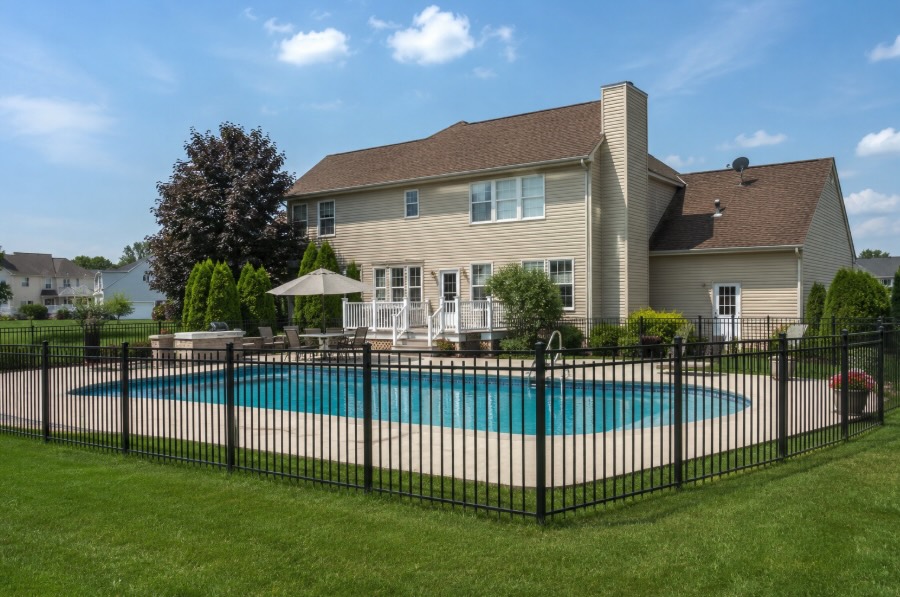
Aluminum is widely considered the top choice for pool enclosures. It does’nt rust. That quality alone makes it ideal for wet environments and especially for properties near the shore.
Towns at the Jersy Shore see consistent salt air exposure. Aluminum handles that environment extremely well. Additionally, aluminum fencing comes in a wide range of elegant styles. Many homeowners appreciate that it frames the pool without blocking the backyard view entirely.
Aluminum is also low maintenance. It does not need painting or staining. A rinse with a garden hose is usually enough to keep it looking clean. For those reasons, it is one of our most requested materials for residential pool projects.
Vinyl Privacy Fencing
Vinyl privacy fencing is another strong option, particularly in more densely built neighborhoods. It blocks sightlines completely from the street and from neighboring yards. That matters in towns where homes sit close together.
Privacy matters to many pool owners. They want to swim and relax without feeling like they are on display. A vinyl privacy fence delivers that. It also holds up well in wet conditions and resists fading, cracking, and warping over time.
Furthermore, vinyl requires minimal upkeep. There is no paint to worry about and no staining required. Periodic cleaning keeps it looking sharp for years.
Browse our vinyl fence options to see available styles and colors.
What About A Wood Fence?
Wood fencing can meet the height and closure requirements under New Jersey code. However, it demands more maintenance in a pool environment. Moisture accelerates rot, and wood near a pool takes a consistent beating. If you prefer the look of wood, discuss it with us. We can walk you through the trade-offs honestly.
Permits and the Installation Process
A pool fence in New Jersey typically requires a permit. That step trips up many homeowners who try to move too fast. Skipping the permit can result in fines, required removal, or complications at resale.
The permit process varies by municipality. Your local building department reviews the proposed fence design, height, gate placement, and materials. Inspections usually follow installation before the permit closes out.
Eastcoast Fence has a deep familiarity with local permit requirements across our service area. We guide clients through the paperwork and help avoid costly delays. Our team has navigated this process across dozens of municipalities in Monmouth County, Ocean County, and beyond.
Timing Your Pool Fence Installation
Many homeowners wait until the pool is already installed to think about the fence. That can cause delays. Ideally, plan the fence at the same time you plan the pool.
The building department in most towns will not allow pool use until the fence inspection passes. Ordering the fence early keeps your opening timeline on track. Spring and early summer installations book up quickly. Reaching out in late winter or early spring gives you the best shot at getting on the schedule before peak season.
Talk to Eastcoast Fence About Your Pool Project
A pool fence is not just a legal requirement. It is a safety structure that protects the people you care about most. Getting it right the first time saves you money and stress down the road.
Our team installs pool fences throughout Monmouth County, Ocean County, and the surrounding region. We work with homeowners, property managers, and real estate developers. Every project gets the same attention to code compliance, material quality, and clean installation.